Terra Rossa Wine: How 900-Meter Terroir Shapes Beit-El
In this article
- The Anatomy of Terra Rossa: What Is Actually in This Soil
- Elevation Changes the Rules: Why Height Above Sea Level Matters
- Dry-Farmed Plots Versus Irrigated Plots: A Direct Comparison
- Seven Varieties, One Hillside: How the Same Soil Speaks Differently
- A Site Layered With History as Well as Geology
- Reading Terra Rossa in the Glass: A Practical Checklist
- Why This Terroir Story Resonates With International Buyers
Long before a single vine was planted on this hillside, the wine had already been decided by rock. The clay underfoot is rust-red, thin over broken limestone, and sitting at an elevation that pushes toward nearly 900 meters at its highest blocks. That combination of stone, height and light is not a backdrop to winemaking here, it is the primary author of the wine's color, structure and aroma, long before Hillel, the family's agronomist, or anyone else ever touches a grape.
The Anatomy of Terra Rossa: What Is Actually in This Soil
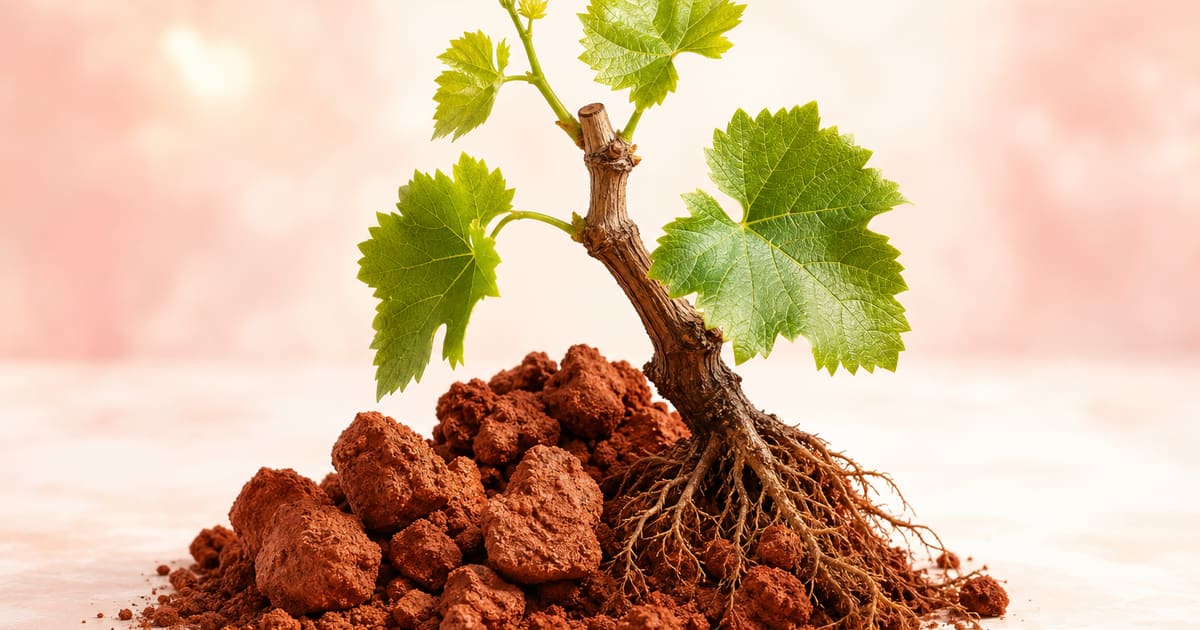
Terra rossa gets its color from iron oxide, specifically the mineral hematite. The reddish color of terra rossa is the result of the preferential formation of hematite over goethite. That same iron content is not just cosmetic. High iron oxide content is responsible for the striking red color and contributes to soil fertility. Beneath the surface, the soil sits on a broken, porous limestone base, which is what makes this soil type behave so differently from ordinary clay.
This soil type typically occurs as a discontinuous layer covering limestone and dolomite bedrock in karst regions, and the high internal drainage and neutral pH conditions of terra rossa are a result of the karstic nature of the underlying limestone and dolomite. In practice, that means water never pools around the roots after rain, and the vine is never sitting in wet, oxygen-starved ground. Compared to most clay-rich soils, terra rossa has surprisingly good drainage characteristics, which makes it a popular soil type for wine production. On this hillside near the site associated with Jacob's Dream, that drainage is doing constant, invisible work under every row.
Elevation Changes the Rules: Why Height Above Sea Level Matters
Grapevines respond to temperature swings between day and night, not just to average heat. At elevations approaching 900 meters, the air cools faster after sunset than it would on flatter, lower ground, which slows sugar accumulation while giving tannins and aromatic compounds more time to develop fully in the skins. This is the same mechanism that makes classic high-elevation and cool-climate terra rossa sites, such as Coonawarra in Australia, prized for producing wines with unusual depth from grapes that ripen slowly rather than quickly.
The practical result in the glass is a wine that can reach full ripeness in color and tannin without losing the acidity that keeps a red wine fresh after a few years in bottle. Shalom-David, who brings a chemist's eye to the winery's decisions, treats this balance between sugar, acid and phenolic ripeness as the single most important marker of when a block is ready to pick, not the calendar, and not a fixed number, but the actual chemistry of that year's fruit at that specific elevation.
Dry-Farmed Plots Versus Irrigated Plots: A Direct Comparison
Not every row on this hillside is treated the same way. Some plots receive irrigation and produce fuller, more consistent canopies year to year. Other plots are left to grow without irrigation at all, relying only on what the terra rossa itself can hold and release through the dry season. The unirrigated vines produce a lower yield, but the fruit that does ripen carries a far more concentrated flavor, because the plant is investing everything into fewer, smaller clusters rather than spreading its energy across abundant growth.
This trade-off is well documented in other terra rossa regions. Vines growing on terra rossa soil in stressed, low-vigor conditions produce low yields of grapes that are highly concentrated in phenolic compounds, which lead to more intense, layered flavors in the finished wine. A hard calcium carbonate layer beneath the topsoil reinforces this naturally: vines are prevented from penetrating the soil beyond the terra rossa by a hard layer of calcium carbonate, keeping vigor restricted. The vine cannot simply chase water downward forever, so it adapts by concentrating what little it has into the fruit itself.
Seven Varieties, One Hillside: How the Same Soil Speaks Differently
Want to hear more about The Manne Family's services?
Contact usSeven grape varieties grow across this terrain, and each reads the terra rossa a little differently, which is exactly why the winery bottles five distinct series rather than a single house style. Jacob's Dream and Revelation lean on the aromatic lift that the elevation preserves, while 5757 Old Vines draws on root systems that have spent years working their way into the limestone fractures beneath the red clay, producing a denser, more structured wine. Tal Binyamin and Majestic sit at different points along that same spectrum, shaped by which blocks their fruit comes from and how much stress those vines experienced that season.
This is the practical argument for site-specific bottling rather than blending everything into one label: a variety planted on a shallow, well-drained terra rossa pocket behaves differently from the same variety planted where the clay runs deeper. Israel, who manages the economics side of the family business, has pointed out that this variation is precisely what international buyers are asking about, not a generic description of an Israeli red wine, but a specific, repeatable account of how one hillside produces several distinct expressions.
A Site Layered With History as Well as Geology
The ground itself carries a weight that goes beyond agronomy. This is the location associated, as told in the Torah, with the patriarch Jacob's dream, a story that has resonated for generations and gives the vineyard's naming, including Jacob's Dream itself, a meaning that is not decorative but rooted in the actual place where the grapes grow. For visitors and trade buyers alike, that context turns a conversation about soil chemistry into a conversation about continuity: vines planted on land with this kind of significance, farmed by a family that includes an agronomist, a chemist and an economist working the same rows their mother, Nina, has watched over for years.
Reading Terra Rossa in the Glass: A Practical Checklist
For anyone tasting a red wine grown on terra rossa at elevation, there are recognizable markers worth checking for, since tannins and anthocyanins are the phenolic compounds that most directly determine a wine's color, taste and structure:
- A deep, almost opaque red-purple color, reflecting the phenolic concentration that low-yield, stressed vines produce
- Firm but fine-grained tannin, built slowly by cool nights rather than rushed by constant heat
- Dark fruit character layered with earthy, mineral undertones rather than simple, one-dimensional fruitiness
- Retained acidity that keeps the wine feeling structured rather than heavy, even with a full body
- Aromatic complexity that continues to open over time in the glass, a sign of slow ripening at height
Why This Terroir Story Resonates With International Buyers
The wines already reach tables in New York, Mumbai, Hong Kong, Tokyo and Seoul, and the terroir story is a large part of why sommeliers curating lists for luxury hotels and private collectors take notice. A wine that can be traced to a specific hillside, a specific soil chemistry and a specific elevation gives buyers something more durable to talk about than a marketing label, it gives them a place, a family, and a repeatable reason for the wine's character.
This November, the Manne family will be presenting at the wine trade fair in Hong Kong, a gathering that has long served as a vibrant platform for learning, networking, and discovery among international producers, importers and buyers. It is a natural meeting point for importers from Mumbai and Nashik, Seoul, Tokyo, Thailand and Singapore who are looking for exactly this kind of traceable, site-driven red wine story to bring into their own markets.
FAQ
What is terra rossa soil and why is it good for growing wine grapes?
Terra rossa is a reddish, iron-rich clay soil that sits over broken limestone, giving it unusually good drainage despite its clay texture. That drainage keeps vine roots healthy while the underlying limestone restricts excess vigor, encouraging vines to concentrate flavor in fewer, smaller grape clusters.
Does vineyard elevation really change how a wine tastes?
Yes. At higher elevations, temperatures drop more sharply at night, which slows sugar buildup in the grapes while giving tannins and aromatic compounds more time to fully develop. This slower ripening tends to produce wines with more structure, freshness and aromatic complexity than wines grown at lower, warmer sites.
Why are some vineyard plots left without irrigation?
Vines grown without irrigation are forced to rely only on natural moisture held in the soil, which limits their growth and yield. That stress leads the plant to concentrate flavor and color compounds into a smaller amount of fruit, producing more intense, layered wine.
What grape varieties grow well in terra rossa soil in Israel?
Terra rossa soil suits a range of red varieties well, since its drainage and mineral content support deep, healthy root systems even in dry conditions. On this particular hillside, seven different varieties are cultivated across several plots, each expressing the same soil somewhat differently depending on elevation and vine age.
The Manne Family is here for you — get in touch.
Contact usWant to share this article?Tap to see a ready-made Facebook post
Long before a single vine was planted on this hillside, the wine had already been decided by rock. The clay underfoot is rust-red, thin over broken limestone, and sitting at an elevation that pushes toward nearly 900 meters at its highest blocks. What is terra rossa soil and why is it good for growing wine grapes?
https://beitelwinery.bizagent.me/a/terra-rossa-soil-elevation-wine-taste