Israeli Wine from Judea and Samaria: Where Scripture Meets Soil
In this article
- A Site With a Story, Not Just a Backstory
- Elevation and Terra Rossa: The Practical Side of the Legend
- Seven Varieties, Farmed the Way a Family Farms
- Why Most Bottles Are Single-Vineyard, Not Blended for Consistency
- Five Series, One Continuous Idea
- Separating Genuine Heritage From Heritage Marketing
- From a Hilltop in Israel to Tables in Six Cities
- What to Look for When Evaluating a Bottle From This Region
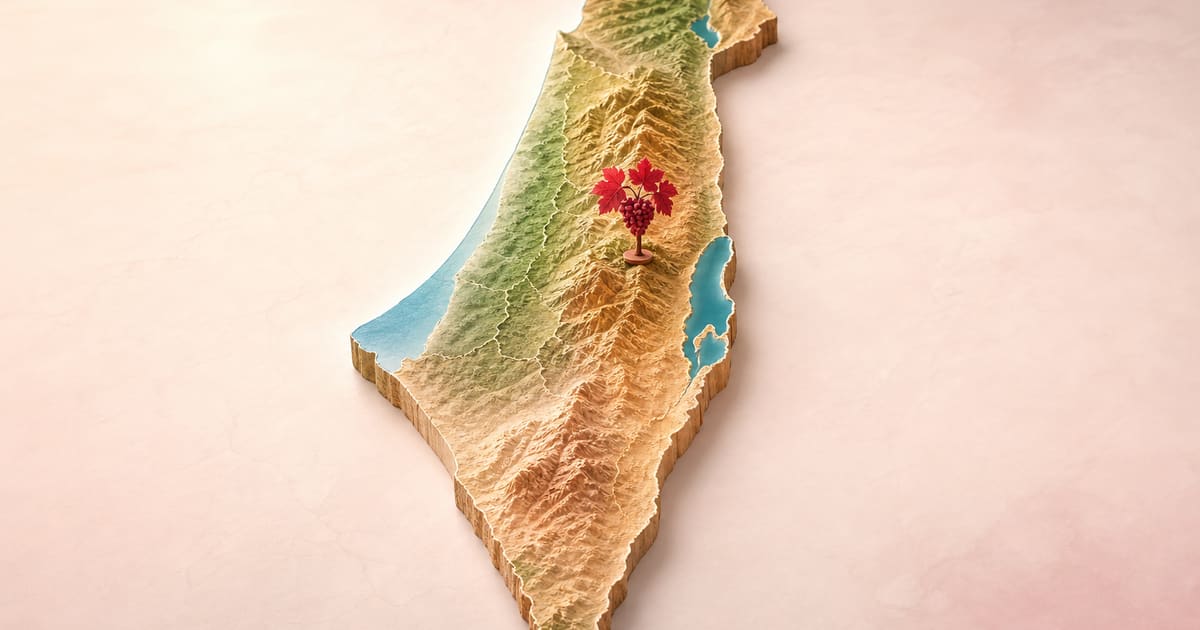
Long before wine labels existed, the hills where Beit-El Winery now grows its vines already had a story attached to them: the place where the patriarch Jacob lay down to sleep and dreamed the dream that still echoes through three faiths. That detail is not marketing color. It is the actual location of the vineyards, and it shapes almost every decision the Manne family makes about how the wine is grown, harvested and bottled.
A Site With a Story, Not Just a Backstory
Many wineries in this region reference the Bible somewhere on their label or website. What sets a site apart is whether the reference is decorative or structural. At Beit-El, the connection to the account of Jacob's dream is geographic fact before it is narrative: the vines are planted on the actual hilltop associated with that event, which means the biblical framing and the physical vineyard are the same place, not two separate stories stitched together for effect.
That distinction matters to buyers who have tasted enough "heritage" wines to be skeptical of the word. A visitor standing among the vines at 850 meters above sea level can see the terrain that produced the story and the terrain that produces the grapes in the same glance. The wine, in that sense, is a direct continuation of the land's oldest recorded use, not a modern invention borrowing an old name.
Elevation and Terra Rossa: The Practical Side of the Legend
Biblical resonance would mean little if the growing conditions were ordinary. They are not. The vineyards sit on terra rossa soil at roughly 850 meters above sea level, a combination that gives the vines cooler nights, better airflow around the canopy, and iron-rich clay that drains well but holds enough structure to stress the roots in a useful way. Vines that struggle slightly, rather than growing unchecked, tend to concentrate flavor rather than dilute it.
Some plots are farmed without irrigation entirely. That choice produces a lower yield per vine, but it pushes the plant to send its limited resources into fewer, more intensely flavored clusters. The result is fruit with a deeper concentration than irrigated vineyards typically achieve, which is part of why the reds carry the deep color and full body the winery is known for.
Seven Varieties, Farmed the Way a Family Farms
Beit-El cultivates seven grape varieties across its plots, each chosen for how it performs on this specific elevation and soil rather than for trend or convenience. Behind that agricultural decision-making stands the Manne family directly: Hillel, an agronomist, oversees how each variety and each plot is managed in the vineyard; Shalom-David, trained as a chemist, brings that discipline to the winemaking side; Israel applies an economics background to how the winery positions its limited releases; and Nina, the mother of the family, anchors the operation as a whole.
That division of expertise is not incidental to the wine's character. A vineyard decision made by an agronomist who understands soil chemistry, refined by a winemaker with a chemist's precision, produces a different outcome than a winery run purely on tradition or purely on marketing instinct. It is this combination, applied consistently across seven varieties and multiple plots, that gives the wines their expressive, sometimes surprising range from one bottling to the next.
Why Most Bottles Are Single-Vineyard, Not Blended for Consistency
Most commercial wineries blend across plots to smooth out vintage variation and guarantee a consistent house style year after year. Beit-El does the opposite for most of its production: it bottles by individual single-vineyard plot, allowing each parcel's specific growing conditions, whether irrigated or dry-farmed, higher or lower on the slope, to show through in the finished wine rather than being averaged away.
This approach carries real tradeoffs. It requires tracking each plot separately from harvest through fermentation and aging, and it means no two vintages from the same plot are guaranteed to taste identical. In exchange, it produces wines with distinct personalities that collectors learn to recognize and, in some cases, wait for. A handful of long-time buyers ask specifically for the next release from a particular vineyard rather than for the winery's wine in general, which is a meaningful signal that the single-vineyard approach is working as intended.
Five Series, One Continuous Idea
Want to hear more about The Manne Family's services?
Contact usThe winery organizes its output into five series: Jacob's Dream, Tal Binyamin, Revelation, 5757 Old Vines, and Majestic. Each draws its name from either the biblical narrative tied to the land or a family and regional reference, and each represents a different expression of the same underlying philosophy rather than a separate brand identity.
- Jacob's Dream ties directly to the site's founding narrative and the specific hilltop where the vines are planted.
- Tal Binyamin reflects the surrounding Binyamin region's geography and character.
- Revelation and Majestic lean into the depth and structure typical of the winery's fuller-bodied reds.
- 5757 Old Vines draws on the age and history of specific vineyard blocks rather than a single harvest year alone.
What unites the five series is not a shared blend but a shared standard: remarkable aromatics, deep red color, full body, and expressive flavor, achieved through the same terra rossa soil and elevation described above. A buyer moving between series is not comparing unrelated wines so much as comparing different plots and different expressions of one estate's character.
Separating Genuine Heritage From Heritage Marketing
The wider Judea and Samaria wine region has leaned heavily into biblical framing over the past two decades, and not every winery's use of that language is equally grounded. Some label references invoke a general regional history; others, including Jeremiah's prophecy that vineyards would once again be planted on the hills of Samaria, point to specific, verifiable locations tied to specific wineries. Buyers evaluating wine from this region can reasonably ask which version they are getting.
A useful test is whether the biblical reference changes anything about how the wine is actually made. At Beit-El, it does: the location dictates the elevation, the elevation dictates the soil and airflow, and those factors dictate the decision to dry-farm certain plots and bottle others as single-vineyard wines. When the heritage story and the agricultural practice point to the same set of facts, the label is describing the vineyard rather than dressing it up.
From a Hilltop in Israel to Tables in Six Cities
Beit-El's wines currently reach buyers in Israel, New York, Mumbai, Hong Kong, Tokyo, and Seoul, a footprint that reflects the same collector interest wherever it appears: buyers who already value precision and craftsmanship in other parts of their life, from the cars they drive to the hotels they choose, and who look for the same qualities in what they pour at the table.
This November, the Manne family will present the winery's wines at the Hong Kong International Wine & Spirits Fair, and the team is especially looking to connect with importers and buyers traveling from Mumbai and Nashik in India, from Seoul, from Tokyo, and from Thailand and Singapore. For importers in those markets who have not yet tasted a single-vineyard red grown on the hills of Judea and Samaria, the fair is an opportunity to taste the connection between the site's history and its wine directly, rather than through a label alone.
What to Look for When Evaluating a Bottle From This Region
For buyers new to Judea and Samaria wine, a few practical markers separate a serious single-vineyard bottling from a generic regional label:
- Whether the label specifies a plot or vineyard name rather than only a general regional appellation.
- Whether elevation and soil type are mentioned as part of the wine's identity, not just its marketing copy.
- Whether the winery discloses if a plot is irrigated or dry-farmed, since this materially affects concentration and aging potential.
- Whether the stated biblical or historical reference corresponds to an actual, specific location tied to the vineyard.
Wines that meet these markers tend to age well while also being enjoyable soon after release, a combination that is harder to achieve than it sounds and that reflects careful vineyard work rather than only cellar technique.
FAQ
What makes Judea and Samaria wine different from other Israeli wine regions?
The region's high elevation, often exceeding 800 meters, combined with terra rossa soil, creates cooler nights and mineral-rich growing conditions that concentrate flavor in the grapes. Many vineyards also sit on sites with direct biblical or historical significance, which shapes both the story and the farming decisions behind the wine.
What does 'single-vineyard' mean for a boutique winery like Beit-El?
It means the wine is bottled from one specific plot rather than blended across multiple vineyards, allowing that plot's unique soil, elevation, and irrigation conditions to define the finished wine's character. Beit-El bottles most of its wines this way, which is why different plots can taste noticeably different even within the same series.
Is the biblical connection to Beit-El's vineyards a real location or just branding?
The vineyards are planted on the actual hilltop traditionally associated with Jacob's dream, making the connection geographic rather than purely promotional. This grounding also explains the site's elevation and soil, which directly influence how the wines are farmed.
Where can international buyers taste or purchase Beit-El Winery wines?
The wines are currently available in Israel, New York, Mumbai, Hong Kong, Tokyo, and Seoul. The Manne family will also be presenting at the Hong Kong International Wine & Spirits Fair this November and welcomes importers from India, South Korea, Japan, Thailand, and Singapore to taste the current releases in person.
The Manne Family is here for you — get in touch.
Contact usWant to share this article?Tap to see a ready-made Facebook post
Long before wine labels existed, the hills where Beit-El Winery now grows its vines already had a story attached to them: the place where the patriarch Jacob lay down to sleep and dreamed the dream that still echoes through three faiths. That detail is not marketing color. What makes Judea and Samaria wine different from other Israeli wine regions?
https://beitelwinery.bizagent.me/a/judea-samaria-biblical-wine-tradition