What Happens in Beit-El's Vineyards Before Harvest Begins
In this article
- The Quiet Months That Get Less Attention Than Harvest Day
- Canopy Work: Letting Sun and Air Reach the Fruit
- Véraison: Reading the Color Change Plot by Plot
- Two Ways to Spend a Summer: Dry-Farmed Rows vs. Irrigated Plots
- Crop Thinning: Matching Fruit Load to What Each Vine Can Actually Ripen
- Watching the Sky: Heat Spikes, Wind, and Disease Pressure
- Walking the Hillside: Why Seven Varieties Need Seven Different Summers
- From a Quiet Vineyard to a Trade Show Floor
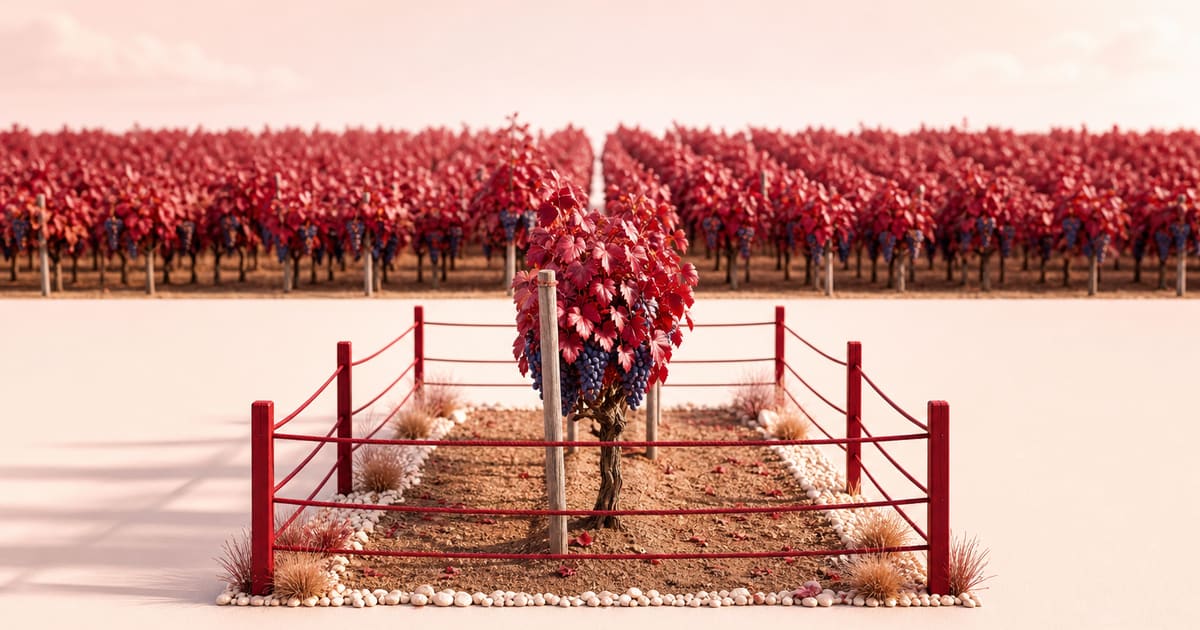
Long before a single grape is picked, the vineyards at 850 meters go through months of canopy management, color-change monitoring, and crop-load decisions that quietly shape what ends up in the bottle. At Beit-El Winery, this stretch runs from early fruit set through véraison and into the final weeks before each plot is assessed on its own schedule for picking. None of it is visible to someone pouring a finished glass, yet it explains why a specific vineyard parcel tastes the way it does, vintage after vintage.
A vineyard in midsummer can look almost finished to an untrained eye: the canopy is full, the clusters are formed, and from the road nothing seems to be happening. The opposite is true. This is the period when a grower decides how much fruit a vine is allowed to ripen, how much sun reaches each cluster, and which rows will be left to fend for themselves on terra rossa soil with no irrigation at all.
The Quiet Months That Get Less Attention Than Harvest Day
Harvest day draws the photographs and the visitors, but the decisions that matter most were already made weeks earlier. Summer canopy work and thinning choices set the ceiling for quality; by the time pickers walk a row, there is very little left to fix. A vine that carried too much fruit in July cannot be rescued in September, and a cluster left shaded all summer will not suddenly gain color and structure in its final days on the vine.
This is why the family treats the summer months at Beit-El Winery with the same seriousness as the picking itself. Hillel, the family agronomist, walks the plots repeatedly through the season, because conditions at 850 meters change from row to row depending on exposure, soil depth, and whether a given block is irrigated or left dry.
Canopy Work: Letting Sun and Air Reach the Fruit
Through the summer, vineyard crews adjust the canopy by positioning shoots and selectively pulling leaves to balance sunlight, shade, and airflow around the developing clusters. Growers manage the canopy by positioning shoots and, when needed, removing leaves to find the right balance of sunlight, shade, and airflow around the fruit. Too little exposure leaves grapes under-ripe and prone to disease in the shade; too much exposure risks sunburned berries, which is a real concern on a site with intense summer sun at altitude.
The guiding principle in this type of work is modest: even a little sunlight flecking on the fruit, as the sun moves through the sky and dances on the clusters, can help improve flavor and wine quality. That is a narrow target, achieved through careful leaf removal rather than stripping a vine bare, and it is one of the reasons canopy work at 850 meters is done by hand, plot by plot, rather than on a single fixed schedule for the whole vineyard.
Véraison: Reading the Color Change Plot by Plot
The clearest marker of the season arrives when the berries stop growing and start ripening. One of summer's most visible milestones is veraison, the stage when grapes begin to change color and transition from growth to ripening. On a single estate growing seven grape varieties across several single-vineyard plots, véraison does not happen on one date. It arrives earlier in some rows and later in others, driven by soil depth, sun exposure, and whether the vines are irrigated or dry-farmed.
That staggered timing is precisely why the estate releases wine by individual plot rather than as one blended bottling. A block that reaches véraison first is not necessarily the best block; it simply ripens on its own calendar, and the final wine reflects the growing conditions of that specific piece of ground rather than an average drawn from the whole hillside.
Two Ways to Spend a Summer: Dry-Farmed Rows vs. Irrigated Plots
Some plots at Beit-El Winery receive no irrigation at all through the summer, forcing roots deeper into the terra rossa in search of moisture. The trade-off is a lower yield, but a fruit that concentrates flavor in a way irrigated vines rarely match. Other plots are managed with scheduled water, which keeps vines productive and steady through the hottest weeks but asks for more active canopy supervision to avoid excess vigor. Both approaches run side by side on the same estate, and the summer routine looks different depending on which one applies to a given row.
Want to hear more about The Manne Family's services?
Contact us| Criterion | Dry-Farmed Plots | Irrigated Plots |
|---|---|---|
| Summer water decisions | None; vine self-regulates | Scheduled by soil and weather |
| Typical yield | Lower | Moderate and more consistent |
| Canopy behavior | Smaller, naturally open | Fuller, needs active thinning |
| Heat stress risk | Vine shows stress visibly, monitored closely | Timing of watering becomes critical |
| Flavor tendency | Intense fruit concentration | Balanced freshness |
Crop Thinning: Matching Fruit Load to What Each Vine Can Actually Ripen
Deciding how many clusters a vine should carry is one of the most consequential calls of the summer, and timing matters. Green harvest done before véraison tends to shape how the remaining clusters develop, while thinning done later in the season mostly just reduces yield.
On the dry-farmed blocks, this decision is especially delicate. A vine already under water stress cannot compensate for an overly generous crop load the way an irrigated vine might, so the thinning pass on those rows tends to be earlier and more conservative. The result, when the plot is finally picked, is the small, dense cluster profile that collectors associate with a specific vineyard bottling rather than a blended wine.
Watching the Sky: Heat Spikes, Wind, and Disease Pressure
Summer in the hill country is not uniformly hot; it includes sharp weather events that growers have to react to quickly. Among them is the hamsin, a hot, dry wind that can push temperatures sharply upward and cause the vines to close down. A hamsin event in mid-summer can stall ripening for days, and a grower who does not adjust leaf exposure or irrigation in response risks uneven development across a plot.
An open canopy also pays off on the disease side. Leaves remain susceptible to disease all season, though they become less susceptible as they age, so limiting new shoot growth by veraison through good canopy management reduces the supply of vulnerable tissue during ripening. Scouting rows after a rain event or a humid stretch, rather than on a fixed weekly rotation, is part of why the summer calendar at 850 meters stays flexible rather than routine.
- Shoot positioning and selective leaf pulling in the fruit zone through early and mid-summer
- Plot-by-plot tracking of véraison, since the seven varieties and different blocks color up on separate schedules
- Crop thinning decisions made before véraison on the lowest-yielding, dry-farmed rows
- Close monitoring of dry-farmed vines for visible stress during hamsin heat spikes
- Disease scouting timed to rain events and humidity rather than a fixed calendar
- Ongoing tasting of berries in the final weeks to track sugar and acid balance before any picking decision is made
Walking the Hillside: Why Seven Varieties Need Seven Different Summers
A vineyard that grows a single variety on uniform soil can manage its summer with one calendar. A hillside carrying seven varieties across plots with different sun exposure and soil depth cannot. Each block effectively runs on its own clock, and the agronomic choices for one plot, how much leaf to pull, whether to thin before or after véraison, whether to irrigate at all, rarely transfer to the plot next to it.
This is also where altitude plays its part. Cooler nights at elevation slow down sugar accumulation relative to lower-lying ground nearby, stretching the ripening window and giving flavor compounds more time to develop before the fruit is ready. Altitude brings cool nights, while limestone and terra rossa soils help give the wines freshness and structure. At 850 meters, that translates into a longer, slower summer for every plot, which is part of what the family is watching for as the season moves toward its final weeks.
From a Quiet Vineyard to a Trade Show Floor
Israel's broader harvest season tends to start in July, though the bulk of it occurs during August through October, and the higher, cooler plots at Beit-El Winery typically run toward the later end of that window. Everything described above, the canopy decisions, the thinning calls, the watch on dry-farmed rows, is what determines how a given bottle from a given plot will actually taste once it reaches a glass. That is the context importers are invited to keep in mind when they meet the Manne family at the Hong Kong wine exhibition this November, including buyers traveling from Mumbai and Nashik, Seoul, Tokyo, Thailand, and Singapore: the character in a single-vineyard bottle was largely set months before the grapes were ever picked.
FAQ
When does wine harvest typically begin in Israel?
Harvest can start as early as July in some areas, but most of Israel's wine grape picking happens between August and October, with higher-elevation vineyards generally finishing later than lower, warmer sites.
What is véraison and why does it matter for wine quality?
Véraison is the point in summer when grapes stop growing and begin ripening, visible as a color change in red varieties. It marks the shift from vegetative growth to flavor and sugar development, making it a key reference point for canopy and crop-load decisions.
Why do some vineyards choose not to irrigate in summer?
Dry-farming forces vine roots deeper into the soil in search of moisture, which typically lowers yield but concentrates flavor in the remaining fruit. At Beit-El Winery, select plots are farmed this way specifically for that intensity, accepting a smaller crop in exchange for character.
Does growing at higher elevation delay the harvest?
Generally yes. Cooler nights at altitude slow sugar accumulation and extend the ripening period, which is why vineyards around 850 meters often pick later than nearby lower-lying plots, even within the same general harvest season.
The Manne Family is here for you — get in touch.
Contact usWant to share this article?Tap to see a ready-made Facebook post
Long before a single grape is picked, the vineyards at 850 meters go through months of canopy management, color-change monitoring, and crop-load decisions that quietly shape what ends up in the bottle. When does wine harvest typically begin in Israel?
https://beitelwinery.bizagent.me/a/summer-vineyard-work-before-harvest