Kosher Mehadrin Wine vs. Mevushal: Why It Matters Abroad
In this article
- Two Kosher Labels, Two Different Questions
- What Kosher Mehadrin Verifies From Grape to Bottle
- The Physical Process Behind the Word Mevushal
- Why the Distinction Changes Handling, Not Kosher Status
- Why Age-Worthy, Collector-Grade Wines Usually Skip the Mevushal Step
- Matching the Bottle to the Buyer
- Reading the Label Before You Order
Two words appear side by side on almost every export label from an Israeli kosher winery, and international buyers routinely assume they describe the same thing. They do not. Kosher Mehadrin describes the level of rabbinical supervision applied to the wine, from the vineyard through bottling. Mevushal describes a single, specific physical step the wine either underwent or did not: a brief heating process. One is about who oversaw the wine and how strictly. The other is about what happened, once, inside a pipe. Buyers who conflate the two end up ordering the wrong wine for the wrong occasion, whether that occasion is a hotel banquet in Seoul or a private cellar in Mumbai.
Two Kosher Labels, Two Different Questions
Mehadrin is not a separate certification body; it is a stringency level that a supervising agency applies across every input in the winery, from the yeast strains to the fining agents to who is permitted to touch the crush pad. Mehadrin literally translates to a beautification of the mitzvah of keeping kosher, implying going beyond the basic requirements of halakha to adhere to the most stringent interpretations and practices. It is not a single, universal certification but an overarching term for a diverse set of certifications that prioritize enhanced stringency in every aspect of production, from raw ingredients to final preparation.
Mevushal, by contrast, has nothing to do with how strict the supervision was. Mevushal literally means cooked, and a mevushal wine has simply been heated during production; that is the whole definition. A wine can carry the highest Mehadrin supervision and still be non-mevushal, and a wine under standard kosher supervision can still be mevushal. The two labels sit on independent axes, and a buyer who checks only one is reading half the label.
What Kosher Mehadrin Verifies From Grape to Bottle
At the winery level, Mehadrin supervision touches details that never appear on a tasting note. Only kosher items or substances may be used in the winemaking process; yeasts, fining and cleaning materials have to be certified as kosher and must not be derived from animal by-products such as gelatin or casein. That single rule shapes which clarification methods a winery can even consider, regardless of how the wine will eventually taste.
The human element is equally specific. Only religious Jews may handle the product and touch the winemaking equipment from the time the grapes arrive at the winery, defined as someone who is Shomer Shabbat, observant of the Sabbath. For a family operation working seven grape varieties across separate plots, this means the supervision follows the fruit plot by plot, not just tank by tank, which is one reason single-vineyard bottlings under Mehadrin supervision carry a documented chain of custody that a blended, mass-market wine typically does not need to prove.
The Physical Process Behind the Word Mevushal
The mevushal rule traces back to concerns, rooted in antiquity, that wine handled by non-Jews outside Jewish supervision could have been used for idolatrous purposes. The reason the word exists on labels at all is a rabbinic law concerning wine handled by someone who is not Jewish, since historically wine held a central place in idolatrous worship and the sages enacted safeguards around wine handled by others. Heating the wine to a defined threshold removed it from that category of concern.
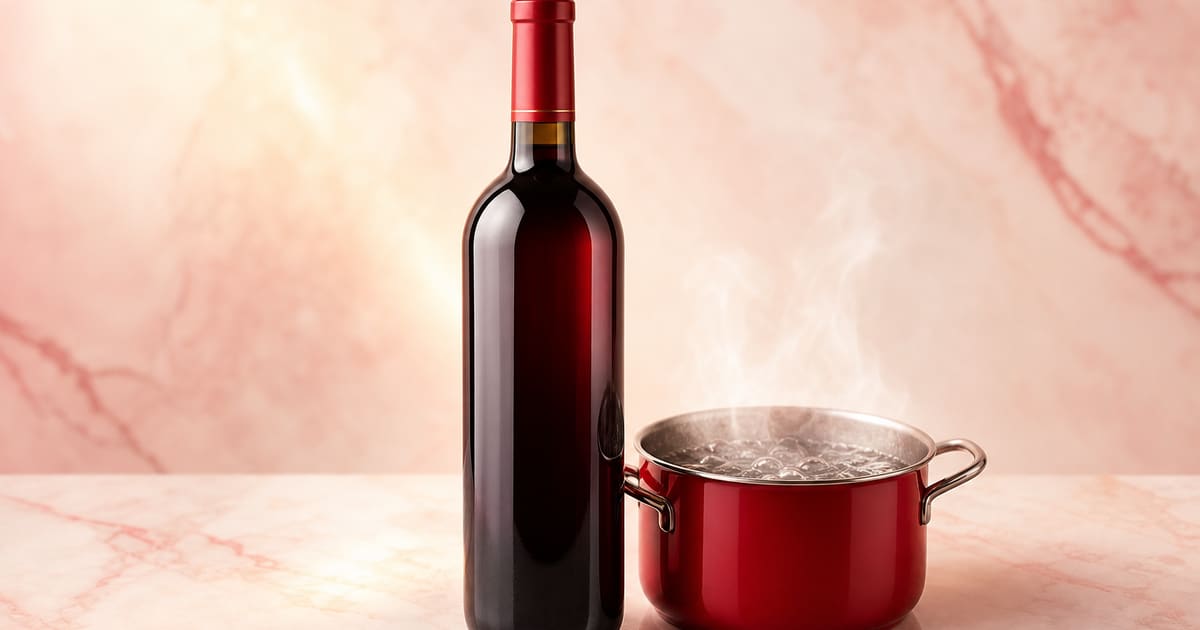
Modern wineries do not boil wine in the literal sense. The prevailing view is that pasteurized wine qualifies as mevushal, with one prominent authority requiring pasteurization to a temperature exceeding 175 degrees Fahrenheit and another insisting on a minimum of 190 degrees Fahrenheit. In practice this is achieved through flash pasteurization: the wine is heated for seconds inside a sealed system and cooled immediately, rather than simmered for any extended period.
Why the Distinction Changes Handling, Not Kosher Status
Both categories are fully kosher; the difference is who can touch the bottle once it is open. Halachically, mevushal wine remains kosher even if it is later handled or poured by someone who is not Jewish, while non-mevushal wine has not undergone this process and its handling carries stricter rules. That single rule is what determines whether a wine can be poured freely at a large event by any member of staff, or must stay under the control of a Sabbath-observant handler once the cork comes out.
Want to hear more about The Manne Family's services?
Contact usFor an importer stocking a wine list across markets, this is a logistics question as much as a religious one: it decides whether a bottle can sit on an open bar for a general audience or needs a dedicated pour. It has no bearing whatsoever on whether either bottle is kosher in the first place.
Why Age-Worthy, Collector-Grade Wines Usually Skip the Mevushal Step
Heat and delicate aromatics have always been an uneasy pair, and that tension still shapes decisions at the top of the kosher wine market. Older pasteurization methods were cruder and heat was not kind to delicate aromatics, but flash pasteurization is a far gentler process, narrowing the difference in a well-made modern mevushal wine to something small enough that most drinkers will not identify it blind. Even so, the gap has not closed entirely at the collector level. Producers making serious, ageworthy, collector-grade wine generally do not make it mevushal, because at that level even a small change is one they are unwilling to accept, which is why classified-growth Bordeaux and Premier Cru Burgundy released in kosher runs are almost always non-mevushal.
The same logic holds inside Israel's own boutique category. The lesser expensive wines used in kosher banqueting are usually the ones that are mevushal, but the best quality Israeli kosher wines are typically those which are not. A wine built to develop over ten or fifteen years in the cellar, poured from a single, low-yield plot, is exactly the kind of bottle where a producer is least willing to introduce any variable that a heat step could bring, however brief and gentle that step has become.
Matching the Bottle to the Buyer
Because Mehadrin and mevushal answer different questions, the right combination depends entirely on who is buying and how the wine will be served. A single portfolio, sold across New York, Mumbai, Hong Kong, Tokyo and Seoul, often needs to cover more than one of these profiles at once.
- Luxury hotel banquet programs with rotating, mixed staff: a mevushal option covers events where the pouring staff may include non-Jewish or non-observant servers, without any risk to kosher status.
- Private collectors building a cellar for a decade or more: a non-mevushal, single-vineyard bottling preserves the maximum long-term aging potential and is the format most serious buyers request by name.
- Retail importers assembling a broad list: stocking both categories across a portfolio, clearly marked on the shelf talker or import sheet, avoids the single most common customer service complaint in kosher wine retail.
- Gift buyers shipping a bottle across a border for a business contact or personal occasion: Mehadrin supervision usually matters more to the recipient than mevushal status, since the bottle is rarely poured by mixed staff at home.
- Distributors entering a new country: confirming which hechsher, or supervising agency mark, is recognized and trusted by local customers matters as much as the mevushal question itself, since recognition varies market by market.
Reading the Label Before You Order
The certification mark itself, known as a hechsher, is the starting point. A hechsher is the kosher certification mark issued by a kosher certification agency, or by an authoritative rabbi respected and known to be learned in Jewish law, or by a Kashruth committee working under a rabbinical court. That mark answers whether the wine is kosher at all. It does not, by itself, answer whether the supervision reached Mehadrin level, and it does not state the mevushal status; both of those need to be checked as separate lines of text on the label or import documentation.
- Confirm the hechsher agency is one your market recognizes, since acceptance differs from country to country.
- Look separately for the word Mehadrin on the label or spec sheet; a plain kosher mark without it does not carry the stricter designation.
- Look separately again for the word mevushal, or its absence, since neither Mehadrin nor a standard kosher mark implies one answer or the other.
- For a banquet or hotel program, request written confirmation of mevushal status before finalizing an order, rather than assuming from the price tier alone.
- For a cellar purchase, ask specifically whether the bottling is non-mevushal, since that detail is the one most linked to long-term aging potential.
At Beit-El Winery, The Manne Family builds its five series around single-vineyard plots grown at 850 meters on terra rossa soil, several unirrigated, producing low yields with concentrated fruit and real aging potential. Wines made to be opened a decade after release, and sought after by name from collectors, are handled with that long horizon in mind at every stage of production. This November, the winery looks forward to meeting importers from Mumbai and Nashik, Seoul, Tokyo, Thailand and Singapore at the wine exhibition in Hong Kong, where these exact questions come up bottle by bottle.
FAQ
Does a Mehadrin certification automatically mean a wine is mevushal?
No. Mehadrin describes the strictness of rabbinical supervision throughout production, while mevushal describes a separate heating step the wine may or may not have undergone. A wine can be Mehadrin and non-mevushal, or standard kosher and mevushal; the two labels must be checked independently.
Does mevushal wine taste noticeably different from non-mevushal wine?
Modern flash pasteurization is fast and gentle enough that most drinkers cannot identify a mevushal wine blind. Still, producers making serious, age-worthy, collector-grade bottlings generally avoid the process, since even a small change is unacceptable at that quality level.
Why do hotels often prefer mevushal wine for banquets?
Mevushal wine remains kosher even if poured by staff who are not Jewish or not Sabbath-observant, which gives banquet and event programs more flexibility with mixed serving staff. Non-mevushal wine, once opened, must stay under the control of a Sabbath-observant handler to retain that status.
Which wines are better suited for long-term cellaring, mevushal or non-mevushal?
Non-mevushal wines are generally preferred for extended cellaring, which is why most single-vineyard, collector-oriented bottlings from serious producers are released as non-mevushal rather than heat-treated.
The Manne Family is here for you — get in touch.
Contact usHere's a ready-made Facebook post
Two words appear side by side on almost every export label from an Israeli kosher winery, and international buyers routinely assume they describe the same thing. They do not. Kosher Mehadrin describes the level of rabbinical supervision applied to the wine, from the vineyard through bottling. Does a Mehadrin certification automatically mean a wine is mevushal?
https://beitelwinery.bizagent.me/a/kosher-mehadrin-vs-mevushal-wine